The Cartoon Chick That Taught the World to Code
A cartoon of a hatching chick inspired programming's most universal ritual. Here's how two words became every coder's first triumph.

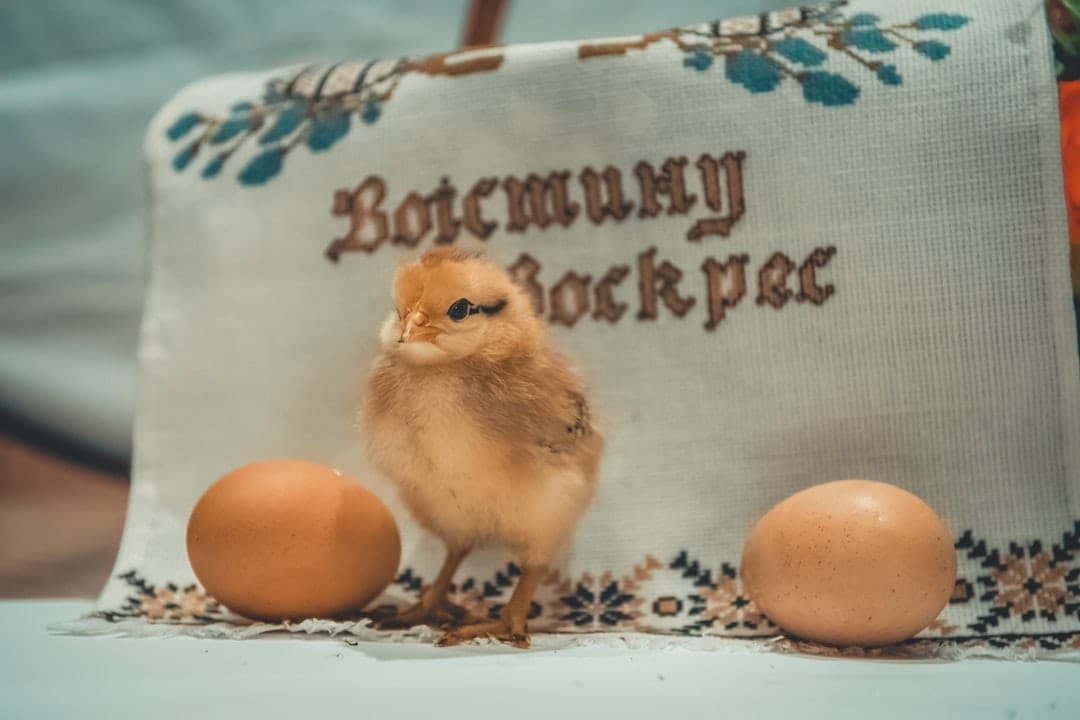
Every programmer remembers their first "Hello, World!" The cursor blinks. You type the words. You run the code. And there it is, on screen: proof that you made a computer do something.
This tiny program has welcomed millions into coding. But where did it come from? The answer involves a Bell Labs engineer, a 1972 memo, and a cartoon of a baby chick.
A Chick Hatches at Bell Labs
In 1972, Brian Kernighan was writing documentation for the B programming language. He needed a simple example. Previous tutorials had used "hi!" as output. Kernighan wanted something longer.
"What I do remember is that I had seen a cartoon that showed an egg and a chick and the chick was saying, 'Hello, World,'" Kernighan later explained.
The phrase stuck. It appeared in his B language tutorial. Then in a 1974 C tutorial memo. But the real tipping point came in 1978.
The Book That Changed Everything
That year, Kernighan and Dennis Ritchie published "The C Programming Language." The book became a bible for developers. And right there on the first pages was Hello World.
The original code looked like this:
```c main() { printf("hello, world\n"); } ```
Simple. Clean. Effective. Every C programmer learned from this book. And every one of them started with those two words.
The convention spread. New languages adopted it. Tutorials copied it. Within years, Hello World became universal.
Why Two Words Matter So Much
Hello World isn't just a test. It's a psychological milestone.
Learning to code is hard. The syntax is unfamiliar. Errors are cryptic. Nothing works the way you expect. Frustration builds quickly.
Then you write Hello World. And it works.
That moment matters. Researchers have found that completing your first runnable program boosts self-efficacy. You proved you can make a computer obey. That confidence carries you through harder challenges ahead.
The program also serves as a sanity check. Did you install the compiler correctly? Is your environment configured? If Hello World runs, everything is working.
A Thousand Languages, One Greeting
Hello World has been written in over 1,000 programming languages. A GitHub repository tracks 1,007 implementations. The Hello World Collection catalogs 603 more, plus 78 human language translations.
The complexity varies wildly. Python needs one line:
```python print("Hello, World!") ```
Java requires a class, a method, and several declarations. Assembly can stretch to dozens of lines depending on the architecture.
Some languages make it deliberately absurd. Esoteric programming languages turn Hello World into a puzzle. The contrast is instructive. A language's Hello World reveals its philosophy.
Beyond Text
Hello World has evolved beyond text output. Hardware projects have their own equivalent: the blinking LED. Make a light blink, and you've proven your circuit works.
Graphics programming has "Hello Triangle." Render a basic triangle, and you've conquered the GPU pipeline.
Web development keeps the original. A webpage displaying "Hello World" shows your server and browser are talking.
The tradition adapts. The principle stays constant. Start simple. Verify the basics. Build from there.
The Accidental Standard
Kernighan never intended to create a universal tradition. He just needed an example longer than "hi!" A cartoon caught his memory. A phrase entered a tutorial.
Fifty years later, that phrase greets every new programmer. It crosses languages, platforms, and generations. No committee designed this standard. No organization mandated it.
Programmers just kept passing it along. Teacher to student. Tutorial to tutorial. Book to book. The tradition sustained itself through simple usefulness.
Your Turn
If you've never written Hello World, try it. Pick a language. Find a tutorial. Type the code.
Watch those two words appear on screen. You've just joined a tradition stretching back to 1972, to a Bell Labs engineer, to a cartoon chick hatching from an egg.
Welcome to the community. Hello, World.